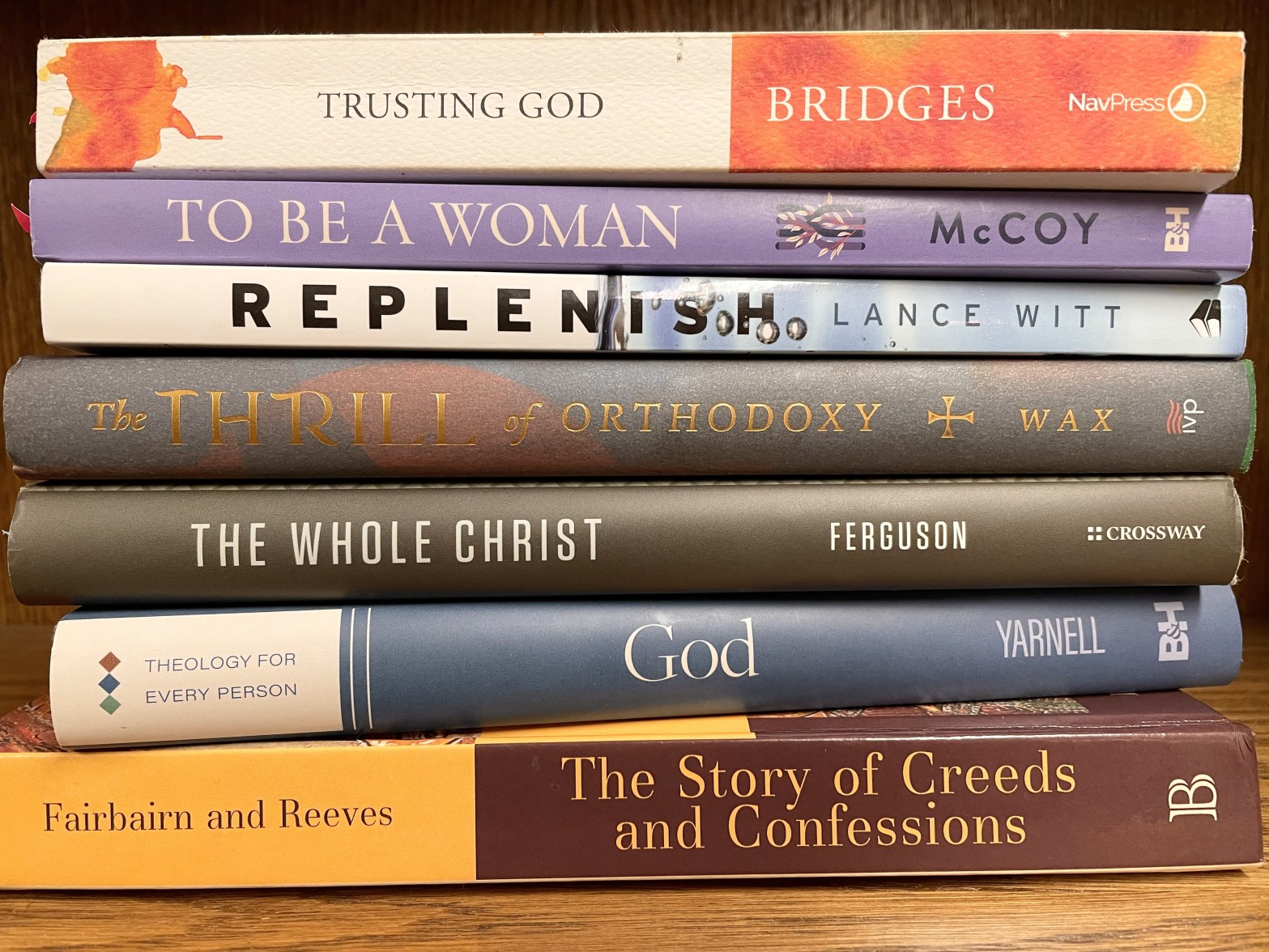
Well, I didn’t get this in before the end of 2024, but nonetheless here’s my list! Some of you (especially members from the church family I serve in) have asked what I’ve been reading.
So here’s a top list in no particular order of my favorite reads from the last year that I think you might also find beneficial. Here we go…
To be a Woman: The Confusion Over Female Identity and How Christians Can Respond, by Katie J. McCoy
Men, don’t let the title keep you from reading this! Next to Nancy Pearcey’s, Love thy Body, Katie McCoy’s book has been the most helpful resource I’ve come across in addressing our culture’s rapid departure from sexual norms, particularly regarding transgender ideology and how it has impacted women.
On such a sensitive and controversial topic, McCoy does a masterful job by informing the reader about topics such as ROGD (rapid onset transgender dysphoria), the reality of the irreversible harm that the medical community has contributed towards youth with gender dysphoria, and the true biological differences between male and female. Yet, best of all, McCoy charitably approaches how Christians should respond from an informed theological perspective for this cultural moment that is both loving and firm.
God: Theology for Every Person, by Malcolm B. Yarnell
If you have ever found concepts like the Trinity or the attributes of God to be interesting but yet mysterious and want to go deeper, I’d start here. The first in a three volume set, Yarnell’s book is a helpful introduction to the doctrine of God. Also, I don’t think I’ve ever read a book where the first chapter was essentially a call to salvation! Is there a better way to start a book on theology? Probably not.
Replenish: Leading from a Healthy Soul, by Lance Witt
This one is particularly for pastors and ministry leaders. It’s better to develop healthy spiritual practices than to wait until you hit burnout. Witt has helped me with this in writing this little work that gets right to the point with short, practical chapters. This will be a book that I’ll come back to again and again in the years to come, especially when the “check engine light” comes on. If you need a book for the soul, this is it.
Trusting God, by Jerry Bridges
This is one of the best books for my own spiritual formation in the last 5 years. Bridges has a way of writing deep truths in simple packages that have left me walking away repeatedly saying, “I never thought of it that way.” Trusting God could be summarized as one long exposition on Romans 8:28, that “All things work together for good for those who love God and are called according to his purpose.”
Aside from Keller’s Walking with God through Pain and Suffering, no other book has so helped me in learning to trust in a God who is simultaneously good and yet in complete control over my life, even when I experience adversity of various stripes. If you’re a Christian walking through heartache or know someone who is, get Bridges’ book.
“As we watch tragic events unfolding, or more particularly as we experience adversity ourselves, we often are prone to ask God why. The reason we ask is because we do not see any possible good to us or glory to God that can come from the particular adverse circumstances that have come upon us or our loved ones. But is not the wisdom of God–thus the glory of God–more eminently displayed in bringing good out of calamity than out of blessing?”
Those words hit differently when considering that the author’s own wife died around the same time Trusting God was first published, not to mention Bridges’ own infirmity with his eyesight throughout his life. This is a man who practiced what he preached.
The Whole Christ, by Sinclair Ferguson
I was introduced to Sinclair’s book while reading Keller’s Preaching, where he references the Whole Christ repeatedly. Sinclair does a masterful job of showing how legalism and antinomianism are “non-identical twins” that both come from the same womb: a false view of God who doesn’t have our best interest in mind. The cure for both therefore, is the gospel of Jesus Christ. Understanding this truth has been a game changer and has impacted my preaching I hope for the better. Consider this quote:
“There is only one genuine cure for legalism. It is the same medicine the gospel prescribes for antinomianism: understanding and tasting union with Jesus Christ himself. This leads to a new love for and obedience to the law of God.”
I’d also add that I can credit Ferguson with a newfound appreciation and clearer understanding of the law/gospel distinction.
The Thrill of Orthodoxy, by Trevon Wax
All too often, I’ve noticed that in the pews, when someone thinks of “doctrine,” they think of armchair theologians who more interested in winning an argument than by being amazed with contemplating our big God. In contrast, by introducing readers to historical orthodoxy, Wax advocates for the humble posture we ought to have that will help us in being “thrilled” when we encounter the Triune God that the Bible and historical creeds describe.
If you’re a pastor, this is a great work to give your Sunday school teachers as well as those who want to experience the “wonder” of Christianity. It also is quite beneficial for addressing the objection of pragmatism against doing good theology.
“The church faces her biggest challenge not when new errors start to win but when old truths no longer wow.”
After reading Wax’s book, I was spurred on to go deeper into a bit of church history. If you are interested with an overview that explains the historical context of how creeds and confessions were put together over the last 2 millennia, this is it. As someone who went through seminary, I felt as if Fairbairn and Reeves’ book filled in the gaps of what I missed in my church history survey courses while in graduate school.
If for nothing else, part 1 by Fairbairn, “The Era of the Creeds (100-500)” –which covers the Nicene Creed, the Definition of Chalcedon, the Apostles’ Creed, and the Athanasian Creed – is worth the price of the entire book. As for Reeves, I was first exposed to his work through his excellent videos on church history that I highly recommend on YouTube here.
That’s it!
 Aaron Garza